Small office fit out Dubai: what decides cost and time
A small office in Dubai is a unit of roughly 60 to 150 m², usually handed over shell or CAT A. It is not a scaled-down full-floor fit out. The ceiling void, the shared AC zone and the landlord's rules on penetrations settle the plan before anyone picks a floor finish, and the same three things settle the price and the programme.
Why a small unit breaks the standard fit-out playbook
On a full CAT B floor you control the services: dedicated air handling, new risers, a comms room with its own cooling. A 100 m² unit inherits them instead. One or two AC zones shared with neighbours, a shallow ceiling void already full of sprinkler pipe and duct, often a single window line. Add a meeting room and you have taken air from a zone you do not control.
Small office interior design in Dubai starts from measured services, not a mood board. Measure to the lowest obstruction rather than to slab, log every diffuser, find the DB and the data riser, then draw. Office fit out for startups Dubai style usually means a lease under five years, so the money goes into what can move with you.
Three constraints that decide the layout
For a small office fit out, Dubai landlords and building managers look at three things first.
| Constraint | What to measure | What it changes |
|---|---|---|
| Ceiling void and AC zone | floor to lowest sprinkler head or duct, diffuser positions, which AHU or FAHU serves the unit | partition height, transfer grilles, how many diffusers move |
| Floor plate and core distance | longest internal run, one or two window lines, travel distance to exit | where the meeting room sits, whether the back needs borrowed light |
| Landlord and façade rules | core drilling allowed, signage position, working hours, lift protection | whether a pantry sink or AC condensate can move, where your sign goes |
A glazed meeting room needs a return air path: an undercut, a grille over the door, a plenum gap. Without it the room runs hot and the shared AC unit, which also serves other tenants, gets the blame. Core drilling for a new pantry waste is usually refused. Signage on the common façade is a building management decision and can take longer than the fit out itself.
The approval path for a small unit
Three gates, in order. Landlord NOC first: tenancy contract or Ejari, trade licence, layout, contractor details, insurance, method statement for noisy or wet work. Second, the DET fit out permit, submitted by the contractor's approved engineer with the NOC and stamped drawings. Third, Civil Defence and DEWA: fire alarm and sprinkler relocation drawings, plus an electrical application if the load changes or the meter is reconnected.
The tenant's part is documents, not forms. Trade licence, Ejari, signed layout, NOC, and one named person who can approve a drawing within a day. Jobs stall on that person more often than on any authority. The fit out permit for a small office in Dubai is rarely the slow part. Building management sign-off is.
What a quote should itemise
Every line should be measurable: strip out and debris removal, permit drawings and submissions, protection of lift, corridor and lobby, partitions with glass type and frame, ceiling works and light positions, flooring with levelling and skirting, power and data containment with floor boxes, joinery by item, diffuser relocation and rebalancing, fire alarm and sprinkler relocation, signage, final clean, as-builts, snagging.
Ask what sits outside. Authority fees, DEWA load upgrades, furniture, IT and AV from your own vendors, after-hours working, the building damage deposit and Civil Defence drawings are the usual gaps. Get exclusions in writing before you compare totals.
Small office fit out cost Dubai comes down to about six lines: how much partition and glass, how many diffusers move, how much joinery, whether power and data come off the existing riser, access and working hours, and whether you keep the ceiling grid. Two 100 m² units can differ by the price of a car on those six. There is no honest rate per square foot at this size, so a quote built line by line from measured quantities is the only one worth signing. That is the standard turnkey office fit-out and flooring under one roof should hold itself to.
Layout choices that buy usable desks
Glass costs more per m² than drywall but it carries light into the back of a deep unit and makes 80 m² read as 100. Drywall wins where you need acoustic separation for a meeting room or a solid wall for storage and screens.
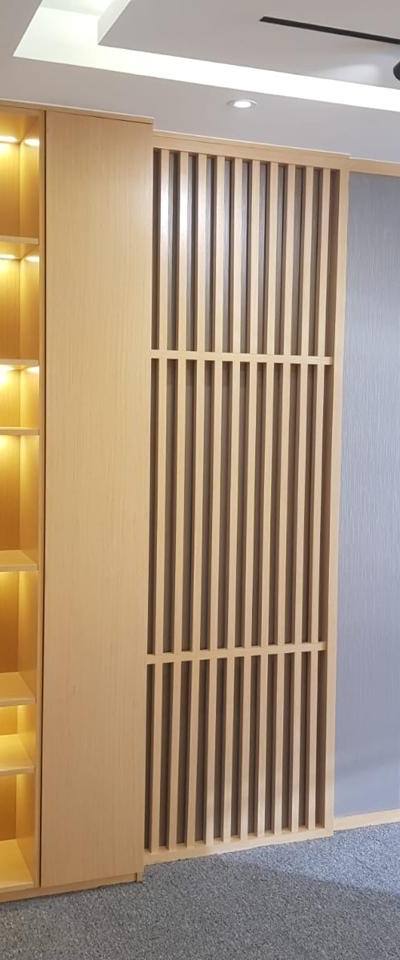
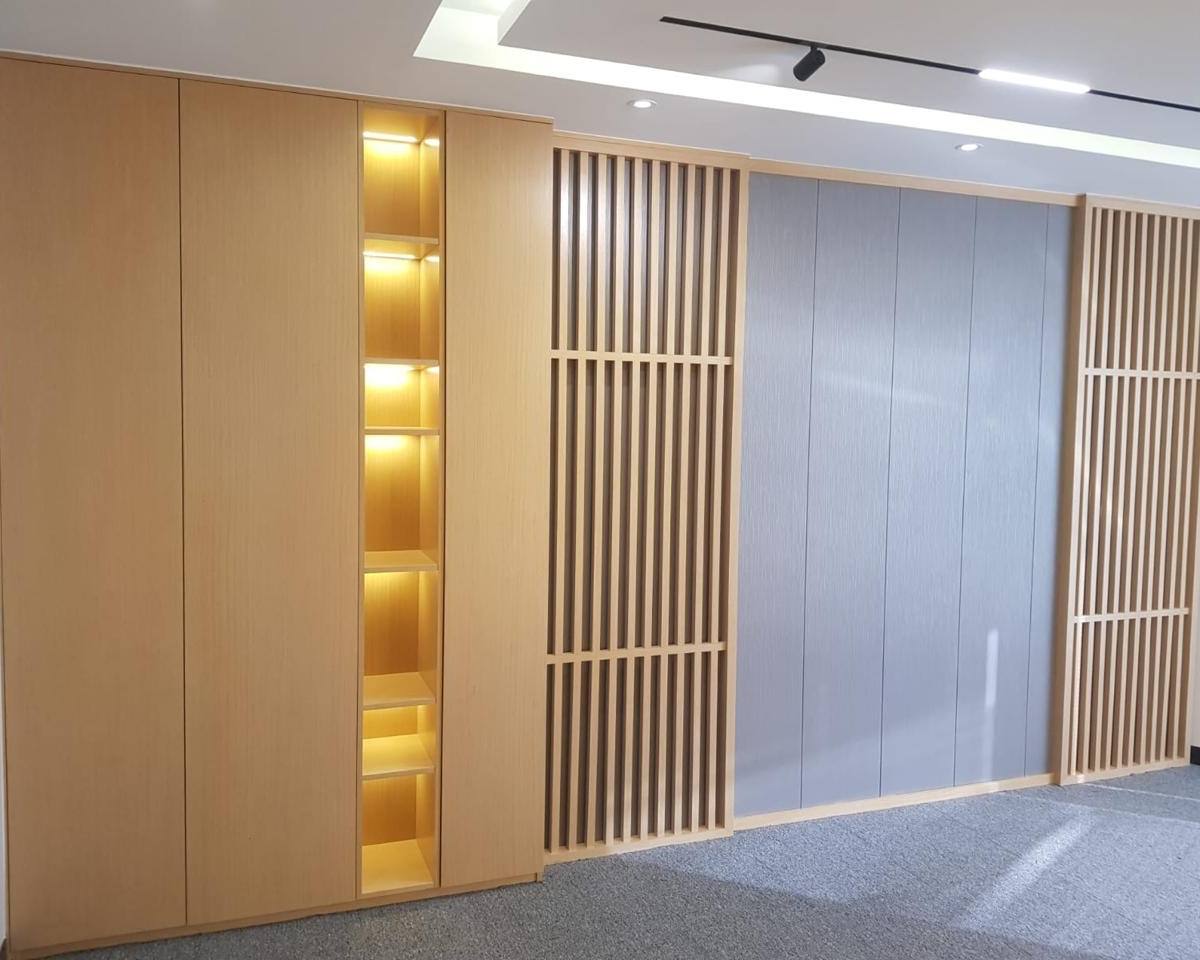
One full-height storage wall on the dead wall replaces filing cabinets, coat storage and a printer bench, and gives the corners back to desks.
A 100 m² unit typically lands at 10 to 14 workstations once circulation, a meeting room and a pantry are allowed for. Benching at 1200 mm with shared pedestals fits more people than 1400 mm individual desks. Hot desking only works when every person has a locker, otherwise bags and boxes end up on desks.
Keep the ceiling grid if you can. Moving every light and diffuser to a new pattern adds cost with almost no visible gain.
Timeline in weeks, and how to phase around a live team
Market ranges, not a promise: survey and design 1 to 2 weeks, building management NOC and permit 2 to 4 weeks, procurement of glass, joinery and flooring 1 to 3 weeks, build 3 to 5 weeks, snagging and handover 1 week. Overlap design with the NOC and a unit of this size lands at 8 to 12 weeks. How long does a small office fit out take in Dubai is usually a question about the building manager and the glass supplier, not the square metres.
To keep a team working, fix the meeting room and the back half first, move people in, then build the front. Dust screens on a temporary frame, negative air where there is cutting, noisy trades after 6pm, and a temporary cooling path so the occupied side keeps its air when a diffuser comes out. Under about 50 m² phasing costs more than it saves. Longer version in fit out an office while your team keeps working.
How to compare two quotes
Compare by line, not by total. Five checks: is the permit and Civil Defence submission inside the price, how many diffusers and lights move, what glass specification is quoted, is levelling and skirting included, and what the exclusions say. The quote that is 15 per cent cheaper usually has one of those five missing.
Send photos from each corner of the unit, a shot of the ceiling showing diffusers and lights, the DB and data riser positions, the length of each wall, the floor to ceiling height at the lowest point, the building name and floor, and whether it is shell or previously fitted. Add your Ejari and trade licence status. WhatsApp is the fastest way to get a first read from us, and you can get a cost estimate for your office fit-out from there. More office fit-out guides if you are still comparing.
Frequently asked questions
Is there a minimum unit size for an office fit out in Dubai?
No fixed minimum at authority level. What changes below about 40 m² is that the fixed items sit on top of very little floor area: permit, protection, mobilisation, debris removal. The cost per square metre climbs, and below roughly 60 m² a meeting room starts to cost you two or three desks to keep the AC working.
Who applies for the fit out permit, the tenant or the contractor?
The contractor's approved engineer submits to DET with the landlord NOC attached. You supply the trade licence, Ejari, signed layout and NOC, and one person who can approve a revised drawing the same day. Design changes after submission are handled as an amendment, and the amendment also needs your signature.
How long does a small office fit out take?
Eight to twelve weeks is the usual range for 60 to 150 m² when design and NOC overlap. The build itself runs three to five weeks. Glass and joinery lead times and how fast building management answers move that number more than the size of the unit. Occupied and phased, allow two to three weeks more.
Do I need landlord approval for internal partitions?
Yes. Almost every building requires a landlord NOC before DET accepts a fit-out application. Building management looks hardest at core drilling, AC changes, slab loading, signage and after-hours access. Internal drywall that touches nothing shared normally clears quickly, anything wet or noisy does not.
Can you fit out a small office while staff are working?
Yes, up to a point. Phasing, dust screens, negative air, noisy trades after hours and a temporary cooling path keep a live team safe next to the work. Under about 50 m² the containment and out-of-hours premium usually beats a short relocation. Agree the occupied phase before the first wall goes up.